%20copy.png)


Iniala Valletta Expands Into a City Within the City

The luxury hotel group continues to grow its vision of city integrated hospitality within Valletta’s UNESCO streetscape

Valletta has always possessed a kind of cinematic grandeur, the sort that reveals itself slowly through limestone streets glowing gold at sunset, weathered balconies suspended above narrow passageways, cathedral domes rising unexpectedly beyond quiet courtyards, and the constant movement of sea light across stone that has stood for centuries. Unlike many historic capitals preserved behind distance and formality, Valletta remains deeply tactile and intensely lived in, a city where cafés spill into alleyways, church bells cut through afternoon heat, and daily life continues to unfold directly against layers of extraordinary history.
It is precisely this relationship between heritage and lived experience that Iniala Valletta appears increasingly interested in exploring. Since opening Harbour House in 2020, the property has quietly established itself as one of the Mediterranean’s most distinctive luxury hotels, approaching hospitality less through conventional resort formulas and more through atmosphere, architecture, gastronomy, and emotional immersion within the city itself. Now, the hotel group founded by entrepreneur and philanthropist Mark Weingard is entering its most ambitious chapter yet, unveiling a sweeping 2026 expansion that will transform Iniala into what the brand describes as “a boutique resort at a city scale,” woven directly into the historic fabric of Valletta’s UNESCO World Heritage setting.
The scale of the vision feels unusually ambitious for a city so deeply tied to preservation and history. What began with the opening of Harbour House has steadily evolved into one of Malta’s most internationally recognized luxury destinations, earning Forbes Five Star status for five consecutive years while also becoming the island’s first two Michelin Key hotel. Yet rather than expanding outward through isolated resort structures, Iniala continues moving in the opposite direction, dispersing itself gently through Valletta’s streets, embedding suites, restaurants, wellness spaces, and experiences directly into the city’s architectural landscape.
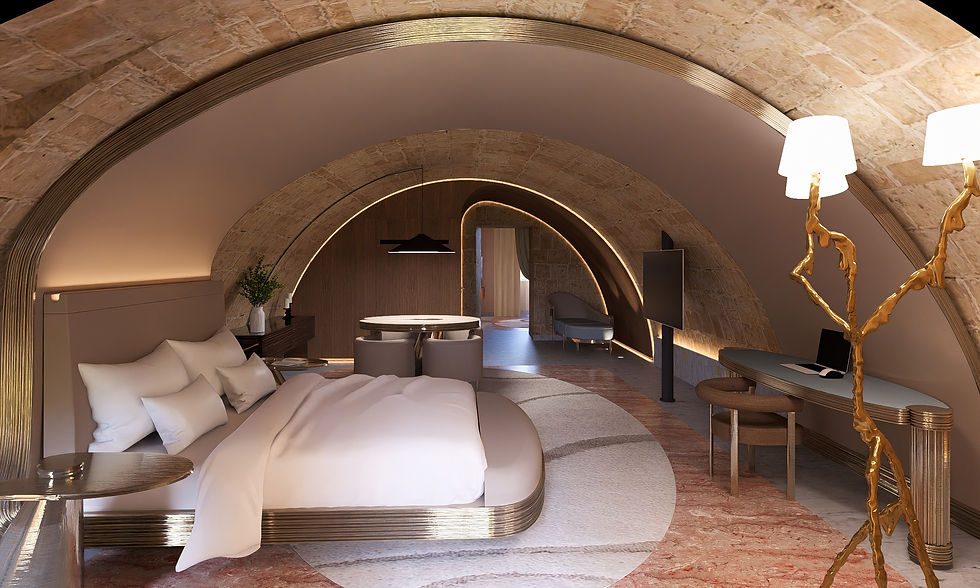
The result feels less like checking into a hotel and more like inhabiting a carefully curated version of Valletta itself. At the centre of the new expansion is Solis, a nine suite wing opening in July 2026 behind the flagship Harbour House property. Designed by Madrid based architecture studio A-cero, the palazzo introduces a dramatically sculptural approach to contemporary hospitality, where smooth contemporary forms emerge almost organically from the city’s centuries old limestone architecture. The architects describe the project through the concept of “excavated architecture,” an idea visible in the way interiors appear carved directly into Valletta’s stone surfaces, balancing raw materiality with highly refined modern restraint.

Natural light moves intentionally through the spaces, emphasizing the texture of local globigerina limestone while bespoke furnishings integrate seamlessly into the architecture itself. The atmosphere feels deeply connected to the city surrounding it, preserving the emotional weight of Valletta’s historic fabric while introducing a softer and more contemporary sense of luxury.
Perched above the property is Anaalā by Chef Ian Kittichai, bringing the celebrated Thai chef’s fire driven cuisine to Valletta’s rooftops following the success of Anaalā at Iniala Beach House in Thailand. The restaurant introduces another layer to the property’s evolving identity, one where Mediterranean atmosphere and Thai culinary intensity begin to intersect naturally through sea air, harbour light, aromatic spice, and open sky.

Kittichai describes the concept as an exploration of authentic Thai heritage approached through modern techniques, designed to merge the warmth and depth of Thai cuisine with Malta’s coastal rhythm and evening light. The pairing feels unexpectedly harmonious. Much like Iniala itself, the restaurant appears less interested in strict geographic identity and more focused on creating cultural dialogue through atmosphere and experience.
Later in the year, the opening of Magistero on Republic Street will introduce an entirely different energy to the property. Designed by Verter Turroni of Italy’s Imperfetto Lab, the eleven suite wing rejects traditional uniformity entirely, instead approaching each room as what the brand describes as “a singular universe,” filled with sculptural furniture pieces created specifically for the project so that no two suites share identical interiors.

The approach feels closer to collectible design than conventional hospitality. Perhaps the boldest gesture within Magistero lies in its treatment of technology itself. Traditional televisions disappear entirely, replaced instead by cinematic laser projections cast directly across walls and paired with immersive Devialet sound systems, transforming the suites into atmospheric living environments rather than standardized hotel rooms. Across the property, craftsmanship and emotional atmosphere consistently take precedence over overt spectacle.
This blending of hospitality and collectible design increasingly reflects where ultra luxury travel itself appears to be moving. Hotels are no longer competing solely through service, location, or scale alone. Increasingly, travellers are searching for spaces carrying creative identity and emotional texture, environments capable of feeling deeply memorable rather than simply comfortable.
Even the newly introduced FrancoMaria Suite reflects this philosophy beautifully. Named after the couple who lived within the historic residence for over sixty years, the suite preserves the emotional memory of the building itself while reinterpreting it through bespoke interiors by Sebastian Brajkovic and Greta Design. Vaulted stone ceilings, sculptural furnishings, marble floors, and soft neutral tones create a space that feels deeply residential rather than overtly hotel like, allowing the history of the home itself to remain visible within the contemporary design language.
That residential quality appears central to Iniala’s wider philosophy. Despite the scale of the expansion, the property continues to emphasize intimacy, atmosphere, and highly personal service shaped around emotional attentiveness rather than performative luxury. Newly appointed General Manager Claudia Schwarze, formerly of Aman Venice and Amankila Bali, now oversees the hotel’s evolving service philosophy through principles rooted in Thai hospitality traditions including Metta, Nam Jai, and Sabai, concepts centred around generosity, tranquillity, kindness, and intuitive care.
In a luxury landscape increasingly dominated by automation and efficiency, the emphasis feels particularly deliberate. Even as Iniala introduces OneAvant, its sophisticated new guest management system allowing visitors to control lighting, climate, dining reservations, concierge services, and room ambiance digitally through personal devices, the property repeatedly reinforces the idea that technology should enhance hospitality rather than replace its human dimension.
Wellness, too, enters a far more ambitious phase through the upcoming launch of Within, a longevity focused wellbeing ecosystem scheduled to debut later in 2026. Existing spa spaces are already undergoing extensive transformation through upgraded treatment rooms, new wellbeing areas, and cold plunge facilities, while future plans include advanced diagnostics and medical partnerships with Saint James Hospital as part of a broader vision centred around long term health, recovery, and executive wellbeing.
This shift toward longevity rather than traditional spa culture reflects one of luxury hospitality’s most significant evolutions. Wellness is no longer treated as a secondary indulgence attached to travel, but increasingly forms part of how modern luxury travellers structure time, movement, recovery, and daily life itself. By 2027, Iniala Valletta aims to reach 90 rooms and five dining destinations across the city, eventually expanding to 150 rooms woven throughout Valletta’s historic eastern quarter by 2030. Yet despite the scale of the vision, the project never appears interested in overpowering the city surrounding it.
Instead, Iniala seems intent on dissolving gently into Valletta itself, allowing architecture, gastronomy, design, and wellbeing to unfold directly inside the texture of the city rather than apart from it. The city becomes part of the experience rather than simply its backdrop. And in that approach lies something increasingly rare within modern luxury hospitality, a sense that place itself still matters.


